
New to K-beauty? This beginner-friendly routine explains the essential steps, how to choose textures, and how to adjust your routine for dry, oily, combination, sensitive, and acne-prone skin.
Korean skincare can look complicated at first. Toners, essences, ampoules, serums, masks, and creams can make it seem as if you need a crowded shelf to get started. You do not.
A useful K-beauty routine is about choosing a few gentle steps that match your skin’s needs and using them consistently. If you are shopping in the United States and trying Korean skincare for the first time, start simple: cleanse, hydrate, treat, moisturize, and protect.
The Simple 5-Step Korean Skincare Routine
1. Cleanse gently
Use a cleanser that removes sunscreen, makeup, oil, and daily buildup without leaving your skin tight or squeaky. In the morning, a gentle water-based cleanser—or simply rinsing with water—may be enough for many people. At night, cleanse more thoroughly. If you wear long-wear makeup or water-resistant sunscreen, try a two-step cleanse: an oil cleanser or balm first, followed by a gentle gel, cream, or foam cleanser.
2. Hydrate with toner or essence
In Korean skincare, toner is often used to add hydration and help the next layers spread comfortably. Look for gentle, moisture-focused formulas with glycerin, panthenol, hyaluronic acid, heartleaf, centella asiatica, or rice extract. If your skin is dry or sensitive, avoid toners that sting or feel strongly alcohol-based.
3. Choose one serum for your main concern
A serum is where you focus on one goal. Start with just one rather than layering many active ingredients at once. Hydrating serums often use hyaluronic acid, glycerin, or beta-glucan. Calming serums may include centella or heartleaf. Niacinamide can be a useful option for an uneven-looking tone or excess oil. Give a new serum at least two weeks before deciding whether it works for you.
4. Moisturize
Moisturizer helps hold water in the skin and supports a comfortable skin barrier. Oily skin still benefits from moisturizer; the difference is usually the texture. Lightweight gel creams suit many people with oily skin or humid weather, while richer creams can feel better on dry skin or in cold weather.
5. Wear sunscreen every morning
Finish your daytime routine with a broad-spectrum sunscreen of SPF 30 or higher. Korean sunscreens are popular because many feel lightweight and easy to layer under makeup, but the best sunscreen is the one you will use consistently. Reapply as needed when spending time outdoors.
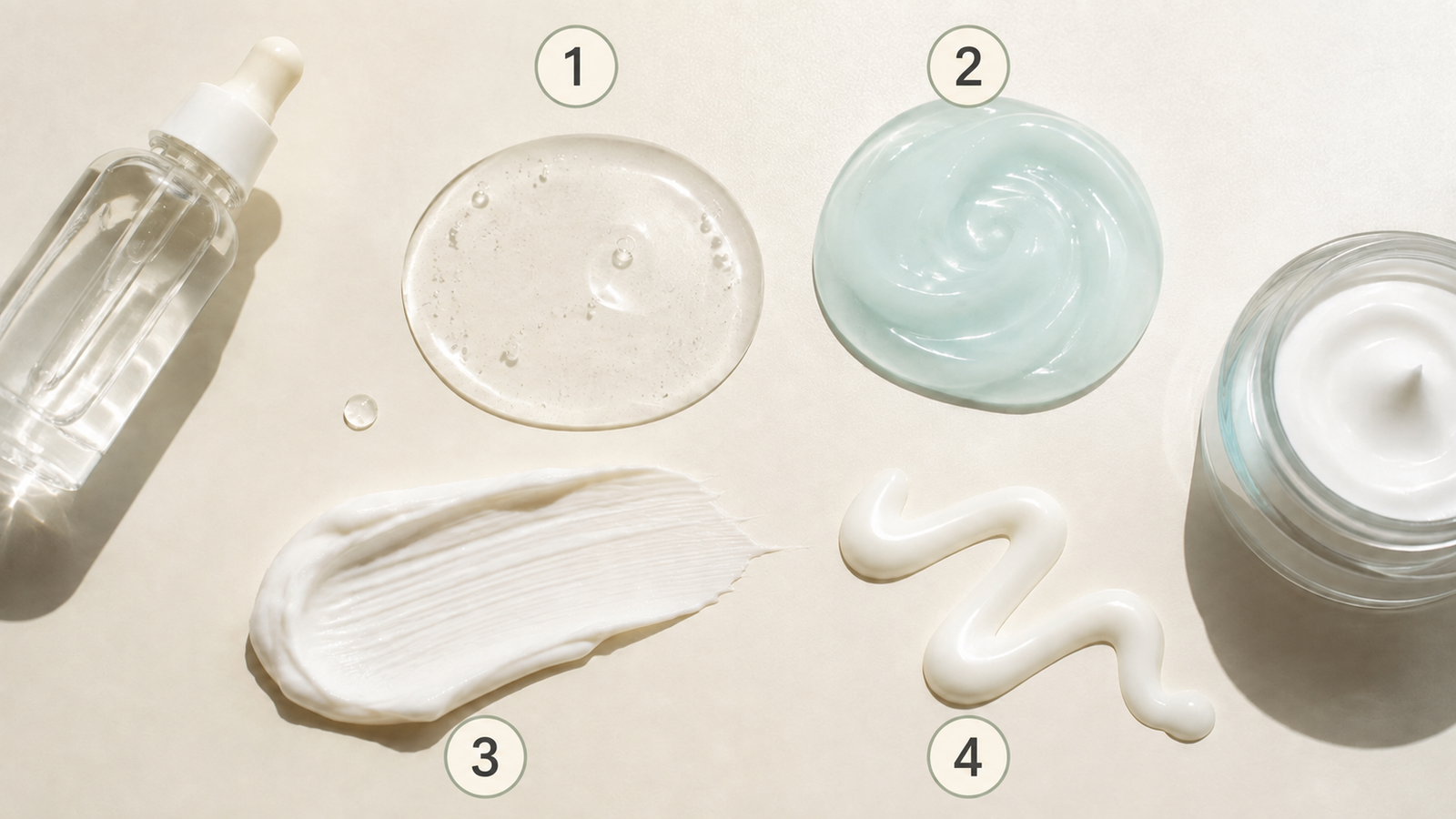
Choose Textures for Your Skin Type
Dry skin
Dry skin may feel tight after cleansing, look dull, or show flaky areas around the nose and cheeks. Focus on hydration and moisture retention. A cream or milk cleanser, hydrating toner, serum with panthenol or hyaluronic acid, and a richer moisturizer are a good starting point. Helpful ingredients include ceramides, glycerin, squalane, panthenol, and rice extract. Apply moisturizer while your skin is slightly damp after toner or serum.
Oily skin
Oily skin often becomes shiny through the forehead, nose, and chin, but it can still be dehydrated. Choose light layers rather than harsh products that make skin feel stripped. A gentle gel cleanser, light hydrating toner, niacinamide or calming serum, and oil-free gel cream can work well. Green tea, heartleaf, centella, and glycerin are often comfortable choices. Do not skip moisturizer—over-drying can make skin feel less balanced.
Combination skin
Combination skin is commonly oilier in the T-zone and drier on the cheeks. Start with gentle products across the whole face, then adjust the amount of moisturizer by area. A low-pH cleanser, hydrating toner, light serum, and gel cream can be enough for most of the face. At night, add a small amount of richer cream only to dry cheeks if needed.
Sensitive skin
Sensitive skin may sting, turn red easily, or react to new products. Keep the routine short and calm: a very gentle cleanser, a fragrance-free hydrating step if needed, a calming serum, a barrier-supporting moisturizer, and gentle broad-spectrum sunscreen. Centella, panthenol, ceramides, and colloidal oatmeal are commonly used in barrier-focused routines. Introduce only one new product at a time and patch-test before using it on your whole face.
Acne-prone skin
Acne-prone skin benefits from consistency, not aggressive cleansing. Use a gentle cleanser, lightweight hydrating layers, a non-comedogenic moisturizer, and sunscreen. Niacinamide, salicylic acid, azelaic acid, and centella are common ingredients to explore, but add active ingredients slowly. Start exfoliating treatments only two or three nights a week and avoid combining several strong treatments at once. For persistent, painful, or scarring acne, a dermatologist is the best source of personalized guidance.
Morning and Night: Keep It Simple
Morning: cleanse or rinse → toner or serum → moisturizer → sunscreen.
Night: first cleanse if needed → gentle cleanser → toner → serum → moisturizer.
You do not need a sheet mask every day. Think of masks, exfoliants, and overnight treatments as optional extras—not the foundation of your routine.
Three Beginner Mistakes to Avoid
- Buying everything at once: Start with cleanser, moisturizer, and sunscreen. Add products only after your skin is comfortable.
- Following viral ingredients without a plan: PDRN, snail mucin, collagen, peptides, and rice can be interesting, but choose products for your skin concern—not only for social-media hype.
- Expecting overnight results: Give a gentle routine time. Make one change at a time so you can notice what your skin actually likes.
The Best Beginner Routine Is the One You Will Repeat
K-beauty is not about using the most steps. It is about helping your skin feel clean, hydrated, comfortable, and protected with a routine you can maintain. Start small, wear sunscreen daily, and give your skin time to adjust.
This article is for general skincare education and is not medical advice. Stop using any product that causes irritation and seek professional advice for persistent skin concerns.